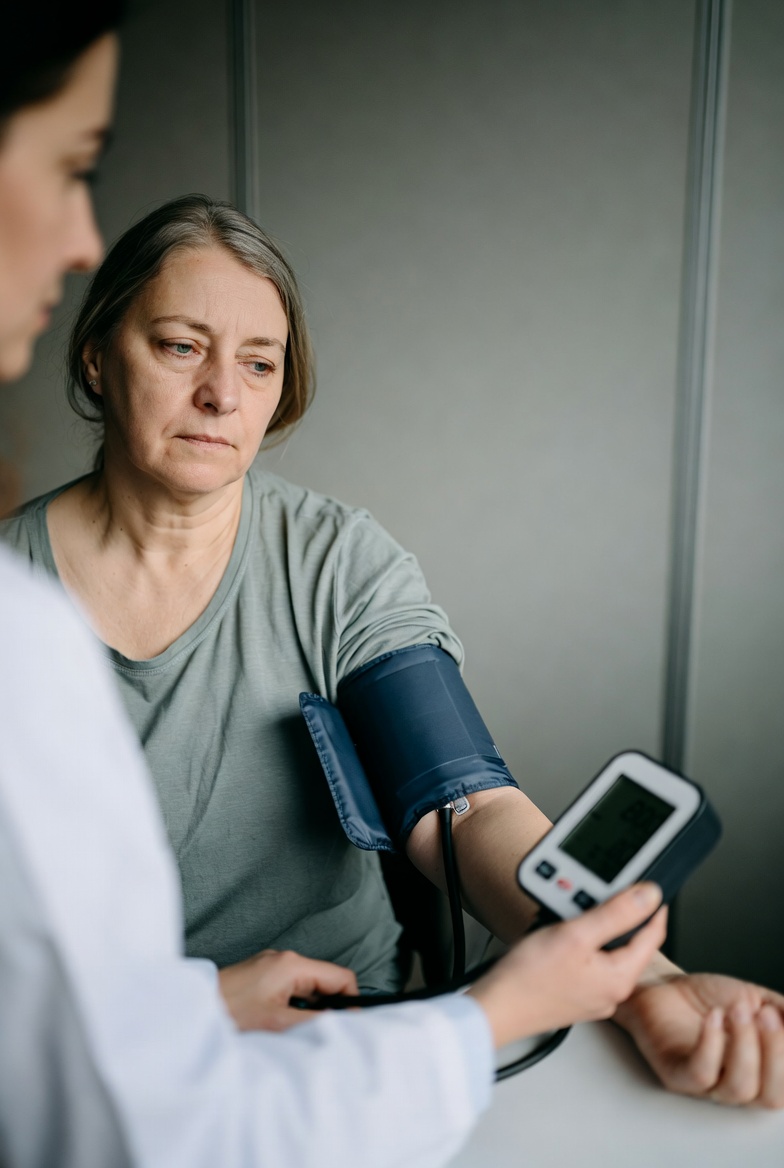
You check your blood pressure almost on a whim, while stopping by the pharmacy or at the doctor’s office, and suddenly the number is a little higher than expected. Doubt sets in immediately. In an already hectic city life, it’s easy to imagine the worst. Yet an occasionally high blood pressure reading doesn’t necessarily mean chronic hypertension.
November 20, 2026
The Very Common Mistake People Make When They Find Their Blood Pressure Is a Little High
Finding out your blood pressure is high can be enough to trigger instant worry.

Why can a single blood pressure reading be misleading?
Blood pressure is extremely sensitive to its surroundings. It varies throughout the day depending on physical activity, emotional state, or even your posture at the moment it’s measured.
I remember very clearly the first time I saw a number that made me jump. It was after a packed morning, phone in hand, still a little out of breath from climbing the stairs. The cuff tightened around my arm and the result came in: too high. My mind immediately imagined the worst.
Later, I understood that several factors could have skewed that first reading. A blood pressure measurement taken right after exertion, in a moment of agitation, or while talking can push the numbers up temporarily. Even crossing your legs or not keeping your back properly supported can sometimes change the result.
Blood pressure is not a fixed value. It reflects the state of the body at a precise moment. That’s why professionals always recommend looking at several readings spread out over time, taken in calm conditions, before drawing any conclusion.
In other words, a single number rarely tells the whole story.
Does an occasionally high blood pressure reading mean hypertension?
No, and that is precisely the most common mistake.
High blood pressure (hypertension) is defined by a lasting elevation of the pressure in the arteries. This means the values remain high over several days, or even several weeks, despite repeated measurements taken under proper conditions.
An isolated spike can appear for many very ordinary reasons: a coffee gulped down too quickly, an emotion, a lack of sleep, or simply the rush of a busy day.
Amid the bustle of city life, our body often moves from one state of alert to another. Blood pressure sometimes follows that movement.
What I found reassuring was understanding that the body constantly adjusts its blood circulation to adapt to different situations. When activity increases, pressure can rise briefly to better supply the muscles and brain with blood.
This mechanism only becomes a problem when it persists over time.
That’s why we always talk about monitoring blood pressure, rather than a verdict based on a single reading.
How can you check your blood pressure more reliably?
If you’ve just seen a number that’s a little high, the first useful reflex is simply to slow down.
Wait a few minutes, sit comfortably with your feet flat on the floor and your back supported. Let your breathing return to normal. Only then, take another measurement.
Measuring your blood pressure at rest, with your arm resting at heart level, remains the most reliable way to get a representative number. Ideally, repeat the process morning and evening for a few days.
When I did this for the first time, the numbers changed very quickly. In the calm of the morning, before emails and the commute, my blood pressure was perfectly normal. It made me realize how much context influences the measurement.
Some everyday habits can also support balanced blood pressure:
· Walking regularly to keep blood vessels supple and stabilize the pressure in the arteries.
· Breathing deeply for a few minutes during the day to relax the blood vessels and gradually bring blood pressure down.
· Favoring a low-salt diet rich in fresh foods to help maintain balanced blood pressure.
· Making time for gentle movement that releases built-up tension.
These physical breaks, which many women are rediscovering through mobility, breathing, or gentle strength sessions, have a very concrete effect. They allow the body to gradually leave its state of constant alert.
What should you do if your blood pressure still worries you?
If several readings remain high, the most sensible thing is simply to talk to a health professional. Only they can confirm whether or not you have lasting hypertension.
But in most cases, that first worrying number acts more like a signal. It reminds us that our body is sensitive to the pace we impose on it.
I’ve seen it around me. Many women discover their blood pressure is a little high during particularly busy periods. Too little movement, rushed meals, shortened sleep… So many small imbalances that, added together, end up weighing on circulation.
Taking this moment as an invitation to slow down, move more, and breathe a little more deeply can already change a great deal.
Sometimes, this simple adjustment is enough to literally take the pressure down.

“A high blood pressure reading at one moment often tells the story of a busy day, not an illness.”
Spark Club · Paris 2nd & 16th
A 15- to 25-minute workout, in a private cabin
This guide is published by Spark Club, an infrared fitness studio in Paris: you work out alone or with one or two friends in a private infrared-heated cabin, and every session is guided on screen by a coach, with no group classes. Two clubs: Sentier (10 rue du Caire, Paris 2nd) and Trocadéro (8 rue Bellini, Paris 16th).
See the Discovery Pass
First visit €20, no commitment