


Your blood pressure may start to rise without you feeling anything in particular. Many women find out almost by chance, during a routine checkup. No obvious signs, sometimes even the feeling of being in great shape. It’s precisely this silence that makes high blood pressure so confusing, and why it deserves a closer look.
November 20, 2026
Why Blood Pressure Often Starts Rising Without Any Symptoms
High blood pressure is one of those discreet conditions that can set in without warning.
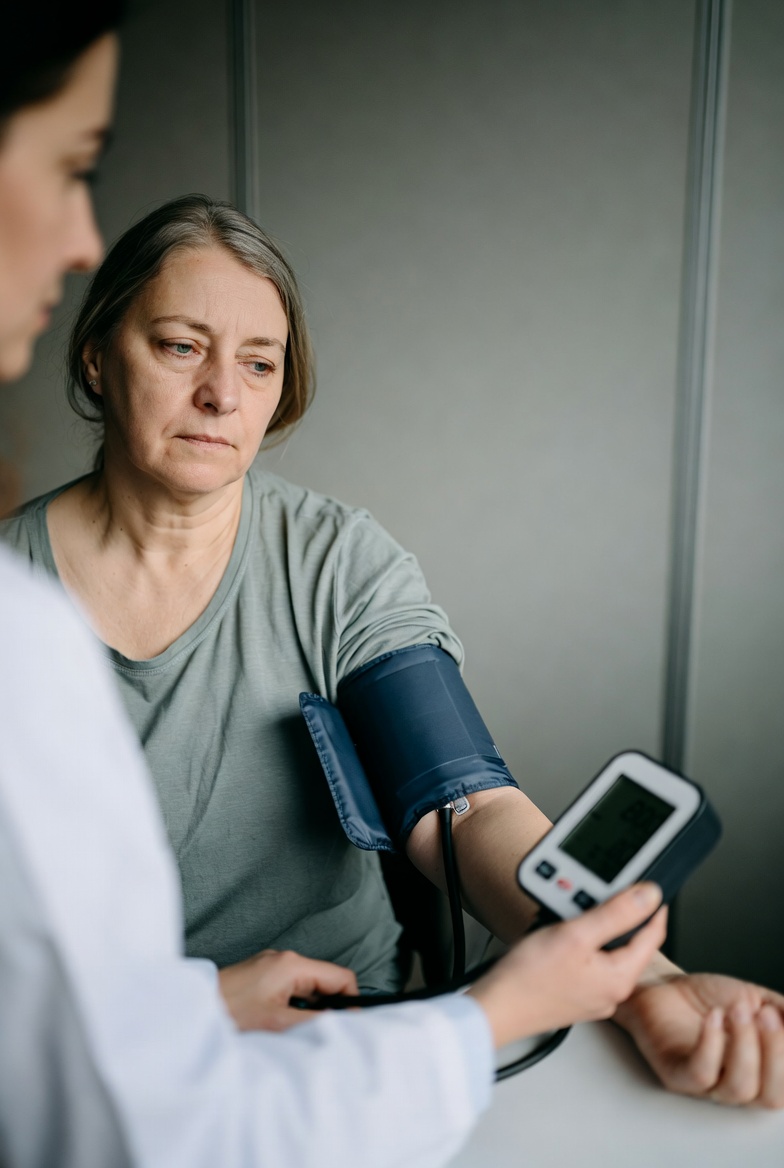
Why does high blood pressure often cause no symptoms?
This is one of the most unsettling features of high blood pressure. It can progress for years without causing any clear sensation.
The reason is fairly simple to understand. The pressure exerted by blood in the arteries increases gradually. Your body adapts to it. Your blood vessels, heart, and organs compensate for this higher pressure for a long time. This silent adaptation can give you the impression that everything is working normally.
I remember a friend who discovered she had high blood pressure during a routine checkup. She told me she hadn’t felt anything at all. That’s a very common reaction.
In reality, high blood pressure acts slowly on the artery walls and on the heart, without immediately causing noticeable signs.
So if you have no symptoms, that doesn’t mean nothing is happening. It simply means your body is still managing to maintain its balance.
Over time, however, this constant pressure ends up wearing out the blood vessels. That’s why monitoring your blood pressure remains important, even when you feel perfectly well.
Why can blood pressure rise with age even if you haven’t really changed your habits?
Many women feel they’re living the same life as before, and yet their blood pressure starts to rise.
Over the years, the arteries gradually lose some of their flexibility. This natural process makes blood flow meet a little more resistance. The heart then has to exert slightly more pressure to circulate the blood.
In everyday city life, other factors can also add up without you realizing it:
· Long, intense days
· Meals sometimes eaten in a hurry
· Physical activity that’s less regular than you think.
I realized this myself a few years ago. Like many Parisian women, I walked a lot around the city. I thought that was more than enough. But walking fast to catch the metro doesn’t have the same effects as a moment when you truly move for yourself.
If you take the time to fit in a few sessions of regular movement, even short ones, you can already support your cardiovascular balance. The body often responds very quickly to this kind of attention.
How can you recognize the subtle signs of rising blood pressure?
Even though high blood pressure often remains silent, some signals can appear in a vague, diffuse way.
You may have already noticed:
· Unusual headaches at the end of the day
· A feeling of pressure in the temples
· Slight dizziness
· More noticeable tiredness when you wake up.
These signs don’t necessarily mean your blood pressure is high. But they can be an invitation to slow down and check what’s going on in your body.
At the end of the week, I used to feel persistent tension in my neck and shoulders. Nothing alarming, but a feeling of constant pressure.
It’s in moments like these that you can choose to pay a little more attention to your body. A simple blood pressure check can sometimes shed light on what was still unclear.
What everyday habits can help stabilize blood pressure?
The good news is that several simple habits can support healthy blood pressure.
Movement remains one of the most accessible forms of support. Not necessarily intense, but regular. When you move several times a week (brisk walking, gentle strength training, mobility work, or deep breathing), you help your blood circulation stay smooth.
Your heart then works under more favorable conditions. It no longer needs to exert as much pressure to circulate the blood.
Diet also plays an important role. When you eat a lot of very salty foods and ultra-processed products, the body retains more water. The volume of circulating blood then increases slightly, which can raise the pressure in the arteries. Gradually cutting back on them helps avoid this.
Breathing and the moments when you slow down also play an often underestimated role. When breathing becomes slower and deeper, the blood vessels dilate slightly and the heart rate decreases.
These adjustments are not radical. But repeated week after week, they create more favorable ground for your cardiovascular balance.

“The body often sends signals long before symptoms appear.”
Spark Club · Paris 2nd & 16th
A 15- to 25-minute workout, in a private cabin
This guide is published by Spark Club, an infrared fitness studio in Paris: you work out alone or with one or two friends in a private infrared-heated cabin, and every session is guided on screen by a coach, with no group classes. Two clubs: Sentier (10 rue du Caire, Paris 2nd) and Trocadéro (8 rue Bellini, Paris 16th).
See the Discovery Pass
First visit €20, no commitment


