


Balance and coordination also depend on your ability to correct a movement very quickly. In everyday city life, this reflex comes into play constantly. An uneven sidewalk, a braking subway train or a sudden change of direction is all it takes. Training should therefore create small, controlled surprises.
November 20, 2026
Balance and Coordination: Exercises That Truly Challenge Your Reflexes
The best balance exercises don’t just ask you to hold steady. They teach you to react.
Which Floor Exercises Really Improve Coordination?
Floor exercises create a reassuring environment for working on motor coordination. You can focus on the quality of the movement without worrying about losing your balance.
The Dead Bug refines cross-body control
The Dead Bug asks your arms and legs to perform opposing actions while keeping your torso stable.
This cross-body work teaches your body to separate several movements happening at the same time. You also improve pelvic control and movement precision.
I find it especially useful after a very sedentary day. It forces you to slow down and quickly reveals differences in control between the two sides of the body.
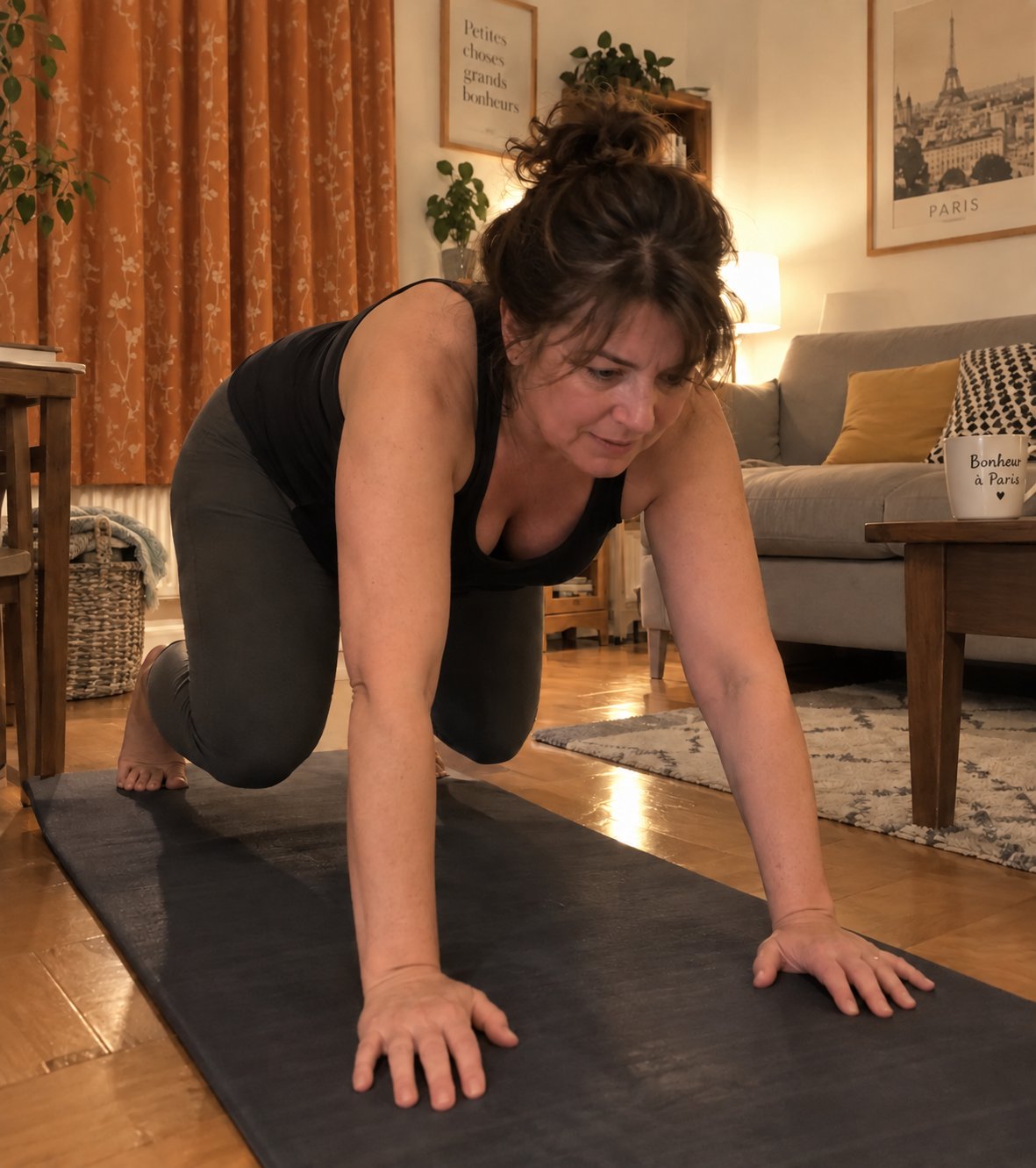
The Bear Crawl reconnects the whole body
The Bear Crawl works the shoulders, pelvis, abs and points of contact with the floor all at once.
Its main value comes from the coordination between the right arm and left leg, then the reverse. Your brain has to organize several pieces of information without losing overall alignment.
This builds cross-body coordination that’s useful in many everyday movements. Walking, running and changing direction also rely on this alternation.
Which Standing Exercises Build Dynamic Balance?
Standing up, the work becomes closer to your everyday movements. Your body has to maintain its axis while moving certain parts independently.
Cross-body marching makes movements more fluid
Cross-body marching combines lifting the knee with touching it with the opposite hand or elbow.
You work on separating the upper and lower body. You also improve your ability to cross the body’s midline without losing stability.
Over time, the movement becomes smoother. You can then reduce visual cues, but only in a safe environment.
The imaginary clock sharpens your reactions
The imaginary clock asks you to stay stable on one leg while the other explores several directions.
This movement constantly shifts your center of gravity. The muscles around the ankle, pelvis and torso then adjust their tension.
You’re working on dynamic balance and your ability to quickly regain a reliable footing. That’s much closer to real life than a perfectly still position.
Heel-to-toe walking refines your footing
Heel-to-toe walking deliberately narrows your base of support. Your margin for error therefore gets smaller.
You have to control each weight transfer with greater precision. Your vision, inner ear and the information coming from your feet all need to stay in sync.
This exercise develops fine stability. I find it revealing, because a few steps are often enough to show whether you compensate more on one side.
How Can You Improve Your Balance Without Putting Yourself at Risk?
To make progress, it’s better to practice a little, but often.
Five to ten minutes a day, or three to four short sessions a week, are enough to sustain motor learning. Your brain repeats the same adjustments and refines its responses. It coordinates the information coming from your eyes, inner ear and points of support more efficiently.
Always start with a stable version. For example, keep one hand lightly on a piece of furniture. Once the movement feels secure, remove that support. You can then slow down, change the rhythm, narrow your base of support or, as a last step, close your eyes in a safe space. This progression keeps you from confusing difficulty with effectiveness.
After one to two weeks of regular practice, you may already feel less hesitant. These first gains come mainly from better neuromuscular organization. Your body recruits the muscles it needs with greater precision.
After four to six weeks, the stabilizers of the ankles, hips and core gradually build endurance. Corrections become smoother and require less conscious attention.
In infrared heat, the gentle warmth can promote muscle relaxation and make easing into movement more comfortable. Above all, you gain ease of movement, as long as you stay well hydrated and prioritize precision over intensity.
In Practice, in Paris
To practice this kind of control work with a coach, Spark Club offers Pilates and Reformer sessions in an infrared cabin: 25 minutes in a private cabin, alone, in pairs or in a group of three, guided on screen.

“Balance isn’t about never wobbling, but about knowing how to find your center again.”
Spark Club · Paris 2nd & 16th
A 15- to 25-minute workout, in a private cabin
This guide is published by Spark Club, an infrared fitness studio in Paris: you work out alone or with one or two friends in a private infrared-heated cabin, and every session is guided on screen by a coach, with no group classes. Two clubs: Sentier (10 rue du Caire, Paris 2nd) and Trocadéro (8 rue Bellini, Paris 16th).
See the Discovery Pass
First visit €20, no commitment


