


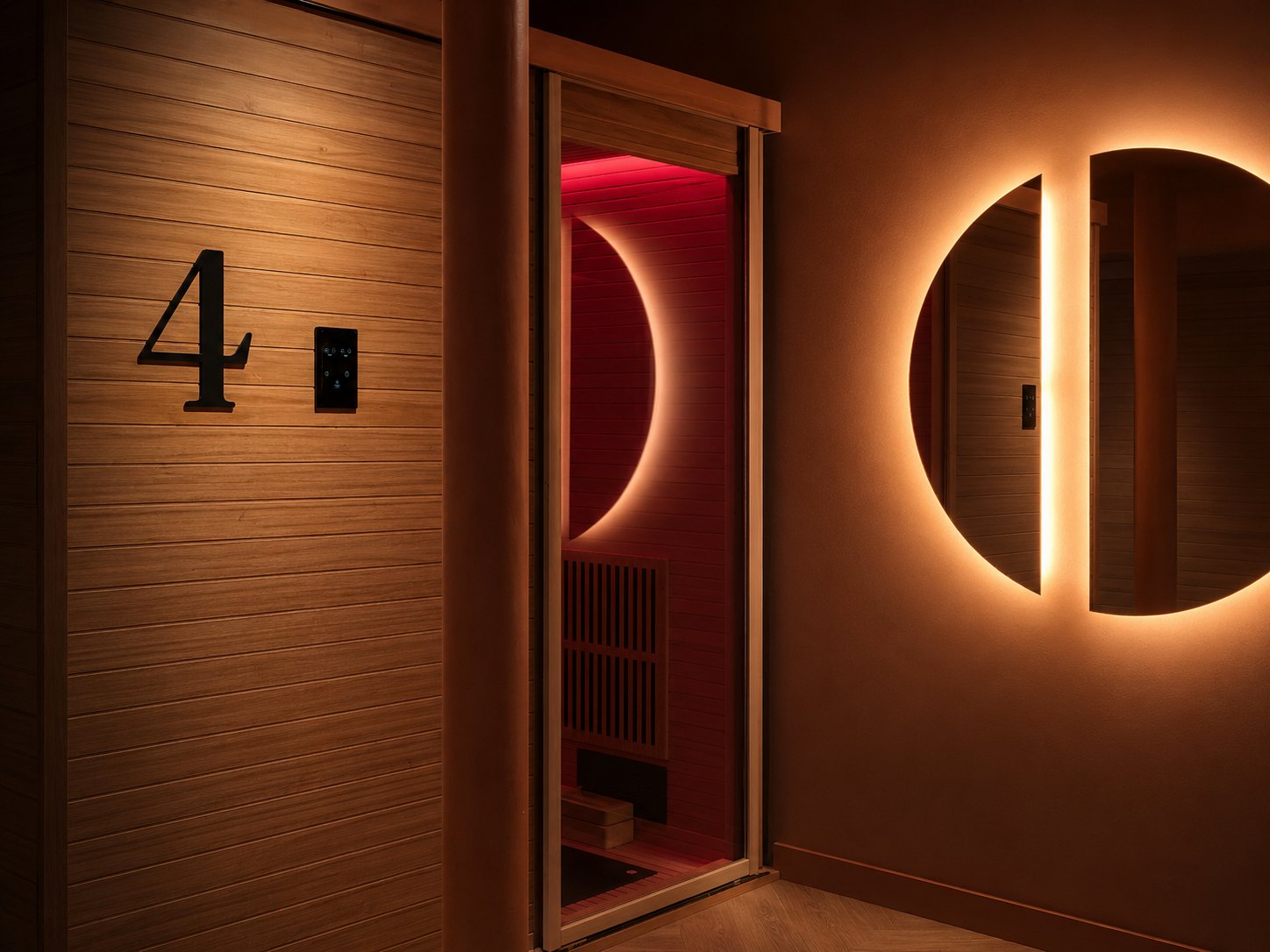
The benefits of infrared saunas documented in studies are modest and mainly concern blood pressure, vascular function and perceived well-being; “detox,” fat loss and most marketing promises are not supported by research. Here, point by point, is what is proven, what is plausible and what is false, with sources.
Proven or Strongly Plausible
Blood pressure and vascular function
A literature review (Beever, Canadian Family Physician, 2009) brings together small studies showing modest reductions in blood pressure and improved endothelial function after repeated infrared sauna sessions. In Japan, Waon therapy (15 minutes at 60 °C followed by rest in a warm environment, under medical supervision) improved vascular function in heart failure patients (Kihara et al., JACC, 2002). These are clinical results obtained in a medical setting: they point to a real mechanism, not a do-it-yourself treatment.
Relaxation and perceived well-being
The systematic review by Hussain and Cohen (2018), covering 40 dry sauna studies, reports favorable effects on self-reported well-being and few adverse effects. It’s also what our members describe: a “clear head” when they come out. It’s subjective, but it’s consistent.
Perceived exertion and acclimation
Exercising in the heat raises heart rate and the sense of effort for the same workload (Périard et al., Physiological Reviews, 2021), and repeated exposure produces acclimation that improves some endurance performance (Lorenzo et al., 2010). This benefit comes from exercising in the heat, not from heat alone.
Plausible, but Not Proven
Muscle recovery
Heat increases blood flow and relaxes muscles; many athletes use the sauna after training. Studies specific to infrared saunas and recovery are small and inconsistent. A likely effect on the feeling of stiffness; no demonstrated effect on next-day performance.
Sleep
The drop in body temperature after heat exposure helps you fall asleep; this is documented for hot baths, less so for infrared. Plausible, worth testing on yourself: a session in the late afternoon or evening, not right before bed.
Chronic pain
A few small studies report improvements in joint pain or fibromyalgia with infrared heat sessions. Not enough to draw conclusions; a topic to discuss with your doctor, not a promise.
False or Greatly Exaggerated
“Sweat flushes out toxins”
Sweat is more than 99% water and electrolytes; the amounts of metals or pollutants excreted are tiny compared with what the liver and kidneys do (Baker, Temperature, 2019). Sweating cools the body; it doesn’t cleanse it.
“600 calories burned in one session”
No study justifies a single figure. Energy expenditure depends on the activity done in the cabin, body size and intensity. A passive sauna session burns little; a rowing session in the heat burns what a rowing session burns, with a higher heart rate.
“Infrared saunas make you lose weight”
The weight lost on the scale after a session is water. Fat loss comes from regular energy expenditure and diet; heat can make a workout shorter and more enjoyable, which helps consistency, and that’s all.
Our Conclusion at Spark Club
We operate infrared cabins, and we’d rather tell you what is proven than what sells. Infrared heat is a pleasant and reasonably safe way to make a workout short, intense and relaxing. The real health benefits are those of regular exercise; the cabin is there to keep you coming back. To try it: Discovery Pass at Trocadéro or at Sentier, €20.


